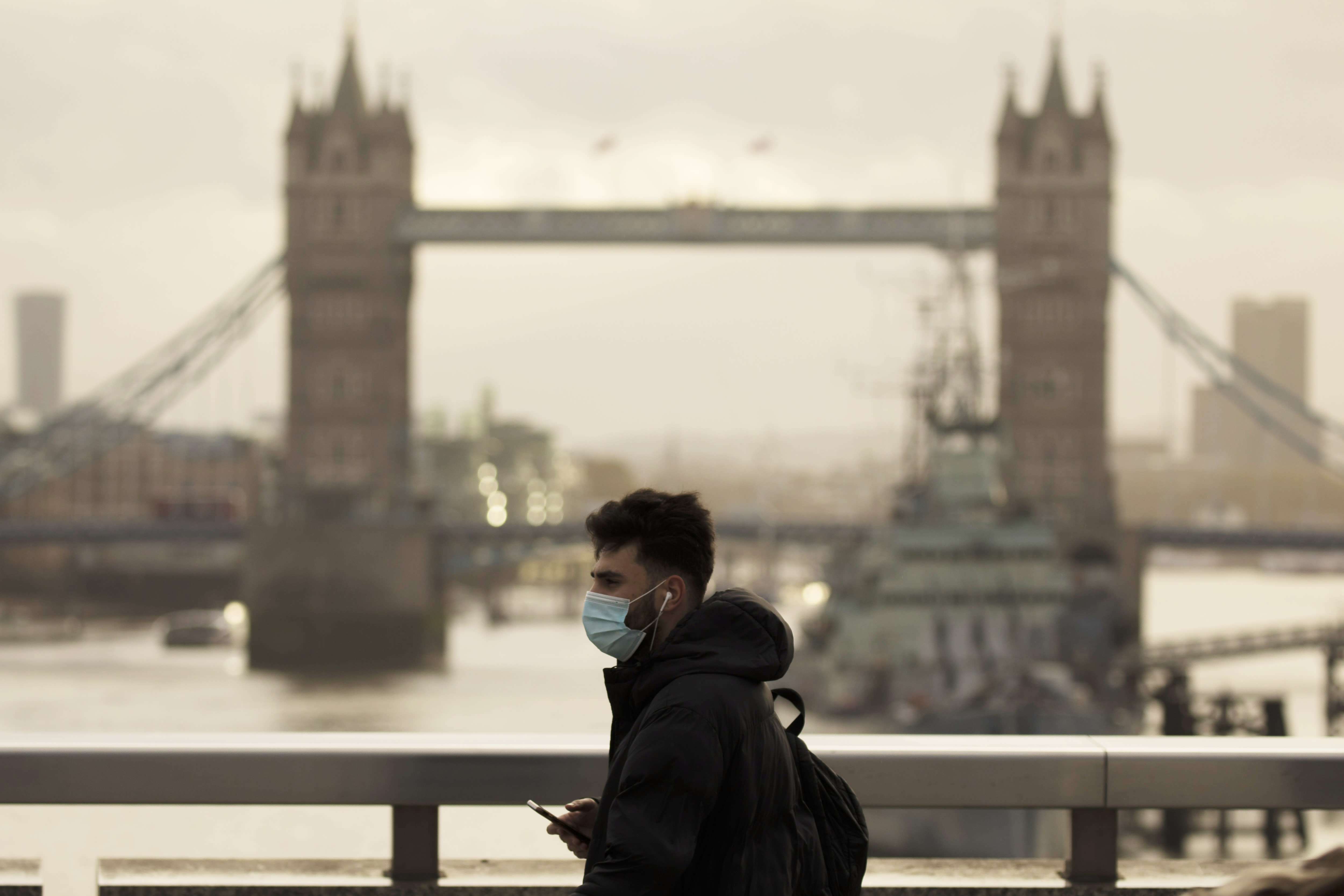
Commuters cross London Bridge in view of Tower Bridge in London, U.K., on Monday, Nov. 2, 2020.
Jason Alden|Bloomberg|Getty Images
LONDON– The U.K. announced Wednesday its biggest peacetime loaning level ever as the coronavirus pandemic is forecast to trigger the biggest plunge in economic output for 300 years.
The British economy is anticipated to contract by 11.3%in 2020, according to the Office for Spending Plan Obligation (OBR), prior to growing by 5.5%in 2021, 6.6%in 2022 and 2.3%, 1.7%and 1.8%in each of the following years.
GDP (gdp) is not expected to go back to pre-crisis levels till the 4th quarter of 2022, and the economy will be around 3%smaller in 2025 than anticipated in the government’s March budget plan.
The OBR also forecast that loaning is set to reach an overall of ₤394 billion this year ($526 billion), 19%of GDP, its greatest level in peacetime history, before being up to ₤164 billion in 2021, ₤105 billion in 2022/ 3 and staying at around ₤100 billion, 4%of GDP, for the rest of the projection duration.
Underlying financial obligation after getting rid of the short-lived effect of the Bank of England’s property purchase program is anticipated to be 91%of GDP this year, rising gradually to 97.5%in 2025/ 6.
In his costs review Wednesday, British Finance Minister Rishi Sunak announced ₤280 billion in public spending to direct the nation through the after-effects of the pandemic.
Next year, this will consist of ₤18 billion for screening, PPE and vaccines, ₤ 3 billion to support the healing of the National Health Service (NHS), ₤ 2 billion on transportation, ₤ 3 billion to regional councils and ₤250 million to attend to homelessness. A further ₤ 2.6 billion will be provided to degenerated administrations in Scotland, Wales and Northern Ireland as part of the ₤55 billion expenditure in 2021.
” High as these costs are, the costs of inaction would have been far higher, however this circumstance is clearly unsustainable over the medium term,” Sunak told your house of Commons on Wednesday.
” We could just act in the way we have due to the fact that we entered this crisis with strong public financial resources, and we have the duty, when the economy recovers, to return to a sustainable financial position.”
Ahead of the release, Prime Minister Boris Johnson’s spokesman had informed reporters that the OBR forecasts would be “sobering” but that “costs would have been much greater” had the federal government not taken its picked course of action to combat the pandemic.
As of Wednesday morning, the U.K. has recorded more than 1.5 million cases of Covid-19 and 55,935 deaths, according to information put together by Johns Hopkins University. England is presently in lockdown up until December 2 in a quote to stop a second wave of infections, after which an across the country tiering system will be reestablished.
Initial figures from the Workplace for National Stats (ONS) earlier this month showed the U.K. economy grew by 15.5%in the 3rd quarter, its sharpest quarterly growth considering that records began, following a record 19.8%plunge in the previous quarter.
Nevertheless, activity is anticipated to take another hit in the added to year-end. GDP (gross domestic product) remains 9.7%listed below the level seen at the end of 2019, according to the ONS.
Unemployment to peak next year
In an effort to prevent an unexpected spike in joblessness, the federal government has already announced the extension of its furlough scheme up until completion of March.
Sunak promoted the government’s economic reaction in his statement, highlighting that the plan had “secured tasks, supported earnings and assisted services survive.”
However, the OBR has projected that joblessness will increase to a peak of 7.5%, or 2.6 million people, in the 2nd quarter of 2021, prior to falling progressively to 4.4%by the end of 2024.
Sunak revealed a more ₤ 3 billion on Wednesday for the Department for Work and Pensions (DWP) to deliver a “three-year restart program” focused on assisting more than 1 million people who have actually been out of work for over a year back into work.
Capital investment will total ₤100 billion in 2021, a ₤27 billion boost on in 2015, and Sunak likewise announced the production of a brand-new National Infrastructure Bank and higher investment in research and development (R&D).
In her reaction to the costs review, Labour’s Shadow Finance Minister Anneliese Dodds slammed Sunak for failing to discuss Brexit and the approaching deadline for the U.K. to concur an open market agreement with the European Union.
‘ Laying the structures’
In a declaration Wednesday, the CBI (Confederation of British Industry) applauded the spending review as laying “the structures for a brighter financial future.”
” A brand-new National Facilities Bank, long-lasting funding for development, and a thorough plan for creating jobs and restoring abilities are just some of the building blocks required to deliver on this vision,” said CBI chief financial expert Rain Newton-Smith.
” However aspiration must be matched by action on the ground.
Newton-Smith added that there might be “no let up” in support for services impacted by Covid-19, suggesting that business investment and confidence will be essential to the healing.
PwC chief economist Jonathan Gillham stated in spite of the “eye watering” loaning figures, the ostensible imminence of a Covid-19 vaccine indicates the U.K. economy ought to be able to grow its way out of the budget deficit.
Gillham recommended that ought to Sunak’s plans for the National Infrastructure Bank and increased R&D costs in 2021 and 2022 have actually the desired result, the U.K. could see a more fast recovery than presently anticipated by the OBR.
” The Chancellor’s decision to preserve higher public spending levels with a real term rise of 3.8%is welcome, but core costs is ₤10 billion less than what was announced in Spending plan 2020,” Gillham stated.
” However, a refocusing of costs on development priorities combined with ongoing emergency COVID spending, a rise in the national living wage and additional assistance for the long term jobless, need to help those who have actually been hardest hit by the economic repercussions of the COVID pandemic.”
Comments
Post a Comment