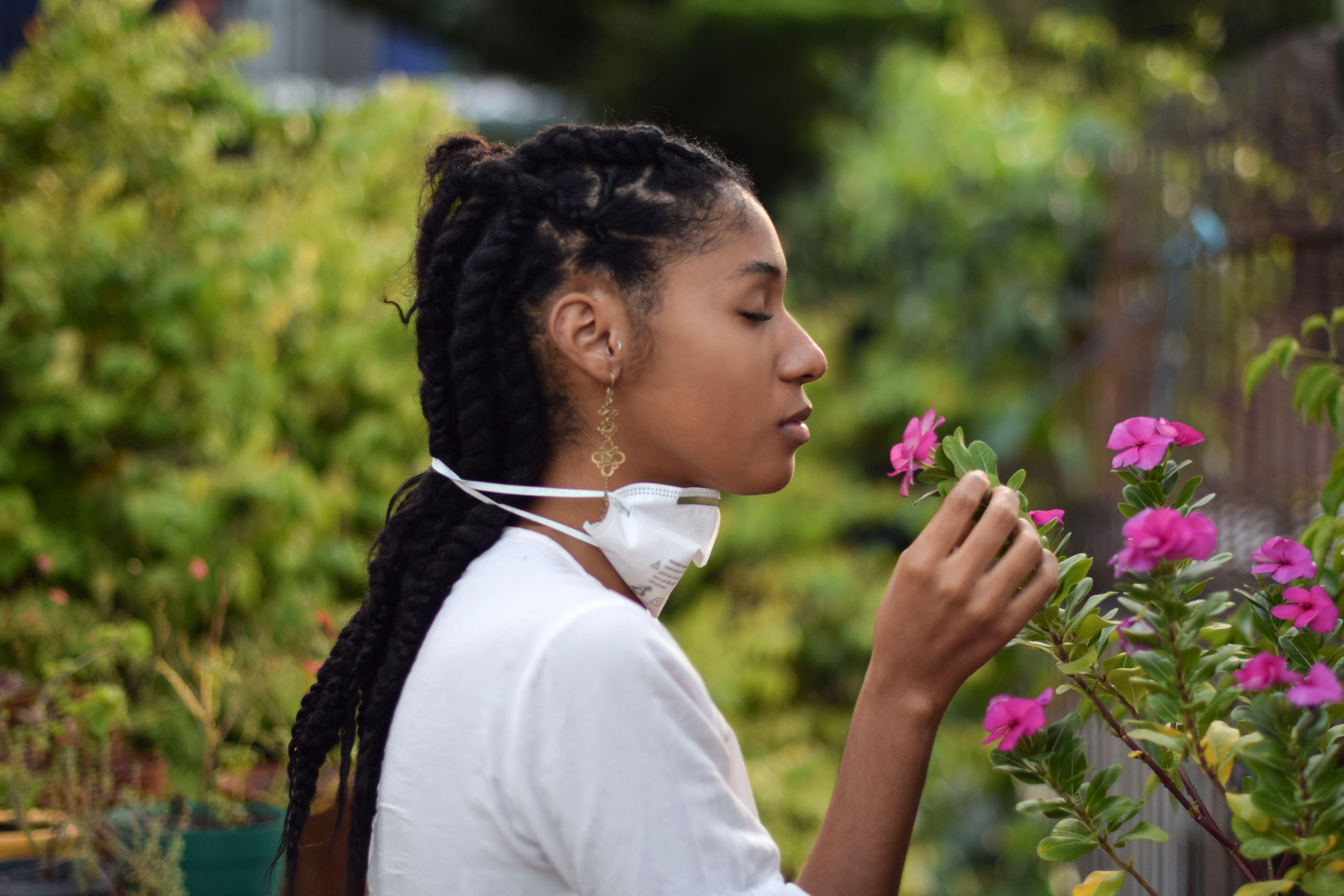
One lingering secret is how the unique coronavirus robs its victims of these senses. Early in the pandemic, doctors and researchers fretted that COVID-related anosmia may indicate that the infection makes its method into the brain through the nose, where it could do severe and lasting damage. A believed path would be via the olfactory nerve cells that notice smells in the air and transfer these signals to the brain. Studies have actually shown that this is most likely not the case, states Sandeep Robert Datta, a neuroscientist at Harvard Medical School. “My gestalt read of the data to date suggests that the main source of insult is actually in the nose, in the nasal epithelium,” the skinlike layer of cells accountable for registering smells. “It appears like the infection attacks, mainly, support cells and stem cells and not neurons straight,” Datta says. But that reality does not suggest that neurons can not be impacted, he emphasizes.
Olfactory nerve cells do not have angiotensin-converting enzyme 2 (ACE2) receptors, which allow the infection entry to cells, on their surface area. Sustentacular cells, which support olfactory nerve cells in crucial methods, are studded with the receptors. These cells maintain the delicate balance of salt ions in the mucous that neurons depend on to send out signals to the brain. If that balance is interrupted, it might lead to a shutdown of neuronal signaling– and for that reason of odor.
The sustentacular cells likewise offer the metabolic and physical support needed to sustain the fingerlike cilia on the olfactory neurons where receptors that detect odors are concentrated. “If you physically interrupt those cilia, you lose the capability to odor,” Datta states.
In a research study in Brain, Behavior and Immunity, Nicolas Meunier, a neuroscientist at the Paris-Saclay University in France, infected the noses of golden Syrian hamsters with SARS-CoV-2. Simply two days later, about half of the hamsters’ sustentacular cells were infected. Olfactory nerve cells were not contaminated even after two weeks. And strikingly, the olfactory epithelia were entirely removed, which, Meunier says, looked like skin peeling after a sunburn. Although olfactory nerve cells were not contaminated, their cilia were entirely gone. “If you remove the cilia, you get rid of the olfactory receptors and the ability to detect odorants,” he says.
Disruption of the olfactory epithelium might describe the loss of odor. It stays uncertain whether the damage is done by the infection itself or getting into immune cells, which Meunier observed after infection. Prevalent reports of anosmia with COVID are not normal of other illness brought on by viruses. “We think it’s very particular to SARS-CoV-2,” Meunier says. In a previous research study with other breathing infections at his lab, he discovered sustentacular cells contaminated just seldom, whereas with SARS-CoV-2, about half of cells contained the pathogen. With other viruses, odor is usually compromised by a stuffed-up nose, but COVID doesn’t normally trigger nasal blockage. “This is really various,” Meunier states.
Researchers have actually discovered a few clues about the loss of odor, however they are less specific about how the infection triggers a loss of taste. Taste receptor cells, which detect chemicals in the saliva and send out signals to the brain, do not include ACE2, so they most likely do not get infected by SARS-CoV-2. However other assistance cells in the tongue carry the receptor, possibly supplying some indicator of why taste disappears. (Although taste can seem to disappear with anosmia since smells are such an essential element of taste, many people with COVID genuinely establish ageusia and can not spot even sweet or salty taste.)
The loss of chemical picking up– the burn of hot chilies or the rejuvenating sensation of mint– also remains inexplicable and largely uncharted. These experiences are not tastes. Instead their detection is communicated by pain-sensing nerves– some of which consist of ACE2— throughout the body, consisting of the mouth.
More ideas to how the virus eliminates odor come from individuals recovering from anosmia. “The bulk of patients lose odor like a light switch going off and recover it rapidly,” Datta states.
Still, more than seven months after he first experienced anosmia, Kantor falls in the second group of patients: he has yet to find any smells at all. “It’s difficult due to the fact that you don’t realize how much you associate with smell till you lose it,” he states. “If your home were on fire, I wouldn’t understand it. It’s very worrying.” And then there is what anosmia does to the happiness of eating. “Foods that utilized to be good now taste ‘meh,'” Kantor says.
Carol Yan, a rhinologist at the University of California, San Diego, says that anosmia presents a genuine health danger. “It in fact increases death. If you can’t smell and taste food, it can predispose you to hurt, like rotten food or a gas leak,” she says. “It can also cause social withdrawal or nutritional deficits.”
The variation on sensory styles extends to another symptom called parosmia, a possible indication of recovery in individuals with lasting anosmia. After several weeks of anosmia and ageusia, when whatever tasted of “ice cubes and cardboard,” she states, Sawbridge began to gain back the many standard tastes– sweet, salty, sour– but no subtlety of taste, which comes from foods’ aromas.
For a while, all foods smelled of artificial strawberry taste. Now “everything smells hideous and distorted,” Sawbridge says. The smell of onions, she says, is unbearable, and an odd chemical flavor permeates everything.
Parosmia may occur when newly grown stem cells that become neurons in the nose attempt to extend their long fibers, called axons, through tiny holes in the base of the skull and connect with a structure in the brain called the olfactory bulb. Sometimes axons connect to the incorrect place, causing irregular odor, but the miswiring can possibly correct itself, provided sufficient time.
That news is welcome for people such as Sawbridge. But the question she wants responded to is: For how long will her anosmia last? “We do not know the last time course of recovery for those with anosmia,” Yan states, however it is usually from six months to a year. “With long-lasting postviral odor loss from the flu, after six months, there is a 30 to 50 percent opportunity of spontaneous recovery” with no treatment, she adds. “There have been case reports of healing after 2 years. But after that, we believe the regenerative ability might be hindered. And the opportunities of recovery are quite slim, sadly.”
Kantor has tried every avenue you can possibly imagine to restore his sense of smell: a course of high-dose steroids to reduce swelling; a smell-training program with necessary oils; beta-carotene supplements for nerve regrowth; acupuncture. Nothing has made a distinction. Yan advises “irrigation” of the sinuses with budesonide, a topical steroid shown to improve outcomes in a Stanford University study of people with postflu odor loss for more than six months. Another promising treatment Yan and others are investigating is platelet-rich plasma, an anti-inflammatory mixture separated from blood that has actually been utilized to deal with some kinds of nerve damage. With any treatment, Yan states, the results “are not incredible. It’s not like you’ll get up and state, ‘Wow, I can smell again.’ But if you can smell soap again or delight in the taste of some foods, that’s a big gain.”
There is one last distressing note about anosmia: it has been identified as a threat element for some neurodegenerative diseases.
But Yan thinks that worry is overblown. That should reassure Sawbridge and Kantor– and the millions of others worldwide affected with COVID-related odor loss.
Learn More about the coronavirus break out from Scientific American here And read protection from our global network of magazines here

Comments
Post a Comment